

The surgery went well. The surgeon said so. The stitches are healing. The reports look fine. And yet, two weeks later, you’re still struggling to lift your arm above your shoulder, still limping on that knee that was “fixed,” still waking up at night because the stiffness won’t let you sleep.
This is one of the most common and least talked-about experiences after surgery. The procedure itself is only half the recovery. What happens in the weeks and months that follow, how you move, how you rebuild strength, how your body relearns normal function, determines whether you truly recover or simply manage.
That’s exactly what physiotherapy addresses. And in our experience, patients who begin structured physiotherapy treatment in Thane within the recommended window after surgery consistently return to full function faster, with significantly less chronic pain, than those who rest and wait.
Why Rest Alone Is Not Enough After Surgery
There is a deeply held belief that the body heals best when left alone, that rest is the prescription for surgical recovery. It’s partially true: the tissue needs time to repair. But rest, extended past the initial healing phase, becomes its own problem.
Muscles begin to weaken within days of inactivity. Joints stiffen. Scar tissue forms in ways that can restrict movement for years if not addressed early. The nervous system loses its map of normal movement, which is why even after a joint replacement, patients often find that the mechanics of walking feel unfamiliar.
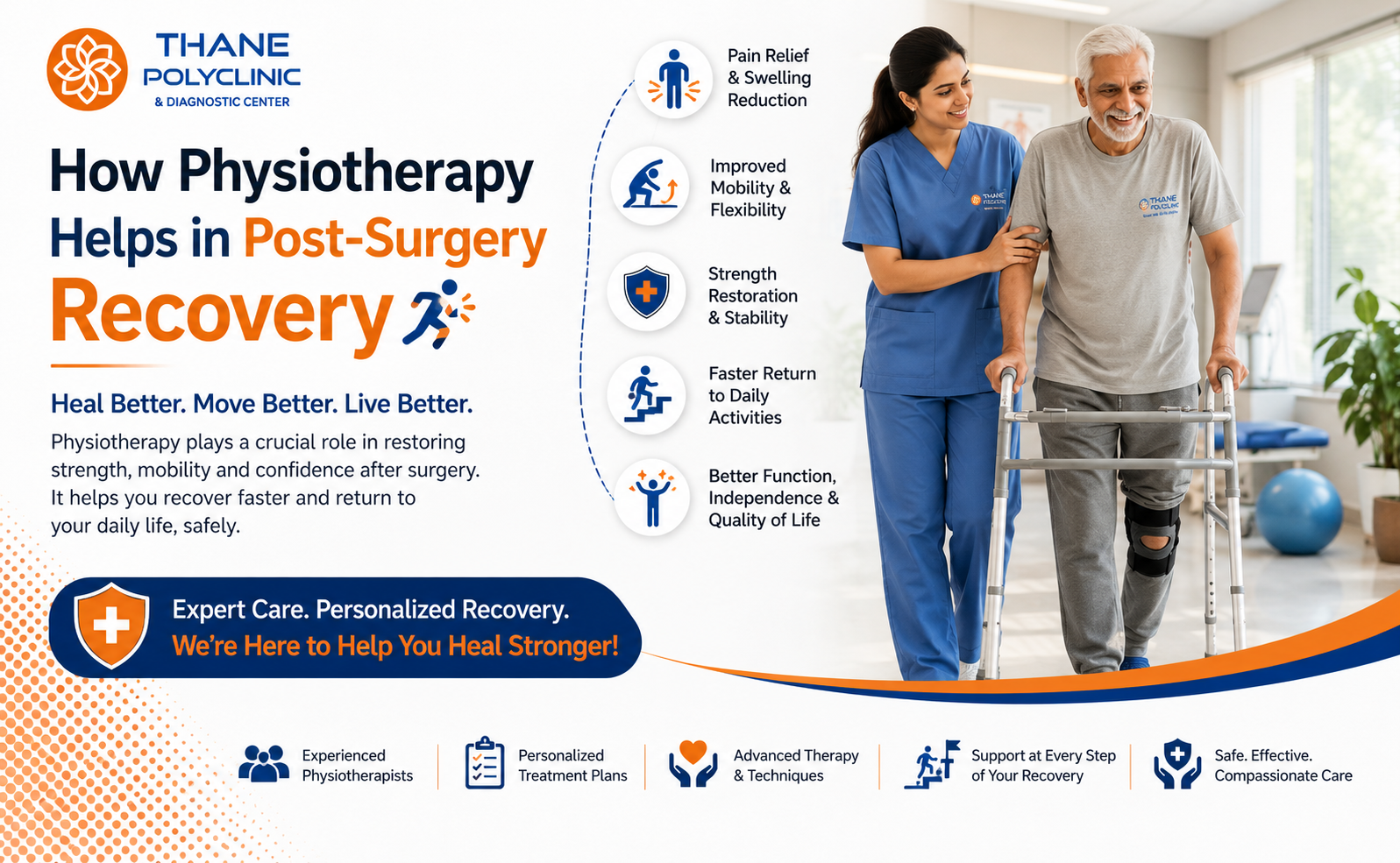
Physiotherapy interrupts this process. It applies controlled, progressive movement to restore function, not randomly, but with a precise understanding of surgical healing timelines, tissue tolerance, and functional goals. This is the science behind why every major orthopaedic, cardiac, and abdominal surgery protocol now includes structured physiotherapy as a standard part of post-operative care.
What Post-Surgical Physiotherapy Actually Involves
This varies considerably depending on the type of surgery, the patient’s baseline health, and the recovery goals. But the broad structure follows a clear progression.
Phase 1rotection and Early Mobility (Days 1–14)
In the immediate post-surgical window, the goal isn’t to push. It’s to prevent. A trained physiotherapist works on:
- Reducing post-operative swelling through lymphatic drainage techniques and positioning
- Gentle breathing exercises, critical after abdominal or thoracic surgeries to prevent chest complications
- Preventing blood clots through careful ankle and lower limb movements
- Beginning very light range-of-motion work to keep joints from locking up
This phase is often overlooked by patients who assume they should simply stay in bed. In reality, early, guided movement in this window reduces complications and shortens total recovery time.
Phase 2 Strength and Range Rebuilding (Weeks 2–6)
Once the initial healing is underway, the focus shifts to restoring what was lost. This includes:
- Progressive strengthening exercises targeting the muscles surrounding the surgical site
- Scar tissue mobilisation to prevent adhesions that restrict movement
- Gait retraining for lower limb surgeries, relearning normal walking patterns
- Balance and proprioception work, especially critical after knee and ankle surgeries
This is where pain relief physiotherapy becomes most immediately tangible. Patients often describe a significant reduction in stiffness and discomfort as mobility is deliberately and consistently restored. The pain isn’t masking a problem, in many cases, the restricted movement is the problem, and addressing it directly provides genuine relief.
Phase 3 Functional Recovery and Return to Activity (Week 6 Onwards)
The final phase is about getting back to life, not just absence of pain, but actual function. Whether that means climbing stairs comfortably, returning to work, resuming housework, or getting back to sport, this phase tailors exercises and progressions to match real-world demands.
What most people don’t realise is that this phase is where many patients quietly give up. The acute pain has eased, the follow-up appointment went well, and it seems like enough. But functional recovery, regaining full strength, coordination, and endurance, takes longer. Stopping early leaves a significant gap that often shows up as re-injury or chronic pain months later.
Surgeries That Benefit Most from Post-Operative Physiotherapy
While physiotherapy supports recovery across virtually all surgical procedures, certain categories show the most significant improvement with structured rehabilitation.
Orthopaedic Surgeries Joint replacements (knee, hip, shoulder), ACL reconstruction, rotator cuff repairs, and spinal surgeries all involve significant disruption to muscles, tendons, and joint capsules. Without targeted physiotherapy treatment in Thane, the risk of long-term stiffness, weakness, and compensatory movement patterns is high.
Abdominal and Pelvic Surgeries Appendectomies, hernia repairs, caesarean sections, and hysterectomies affect the core, the group of muscles that support virtually all movement. Physiotherapy helps restore core function safely, preventing issues like lower back pain and pelvic floor dysfunction that can develop silently over months.
Cardiac Surgeries Bypass procedures and valve repairs are followed by cardiac rehabilitation programmes that include supervised physiotherapy. Breathing exercises, gradual walking protocols, and monitored activity progressions protect the healing heart while rebuilding cardiovascular endurance.
Fracture Fixations and Ligament Repairs After hardware is placed to stabilise a fracture, the bone heals, but the surrounding muscle and connective tissue atrophies quickly. Physiotherapy restores strength and movement in a sequence that respects the hardware and the healing timeline.
The Role of Pain Relief Physiotherapy
Post-surgical pain is complex. Some of it is acute and expected, the direct result of tissue trauma. But a significant portion of the pain patients experience weeks after surgery is driven by muscle guarding, joint stiffness, scar tissue tension, and altered movement patterns.
This type of pain responds very well to physiotherapy. Techniques like dry needling, manual therapy, therapeutic ultrasound, TENS, and targeted stretching address the physical sources of pain without relying on medication alone. Over a structured programme, most patients report meaningful reductions in pain, not just management, but genuine improvement in comfort and function.
What makes pain relief physiotherapy particularly effective in the post-surgical context is that it treats the cause, not just the symptom. Tight scar tissue causing shoulder restriction will continue to cause pain until the tissue is mobilised. No amount of painkillers addresses that, but consistent physiotherapy does.
Starting Early Makes a Measurable Difference
Timing matters in post-surgical rehabilitation. The research is consistent on this: patients who begin physiotherapy within the recommended window, often within the first week after surgery for many procedures, achieve better outcomes than those who delay.
Early physiotherapy reduces the formation of problematic scar tissue, maintains muscle activation patterns, and prevents the psychological avoidance of movement that often develops when pain goes unmanaged. In our experience at Thane Polyclinic, the patients who struggle most with long recoveries are not those with severe surgeries, they are those who waited too long to begin rehabilitation.
If your surgeon has recommended physiotherapy, the best time to start was the day they told you. The second best time is now.
What to Look for in a Physio Clinic in Thane
Not all physiotherapy is equal. For post-surgical recovery specifically, the quality of assessment and the precision of the programme design matter considerably. When choosing a physio clinic in Thane, look for:
- A thorough initial assessment that reviews your surgical notes, current limitations, and functional goals
- A structured, progressive programme, not the same set of exercises week after week
- Clear communication between your physiotherapist and your treating surgeon
- Availability of multiple modalities: manual therapy, electrotherapy, exercise therapy, and education
- A therapist who explains what they’re doing and why, because informed patients participate better and recover faster
At Thane Polyclinic, our physiotherapy services are integrated with our broader specialist care. This means your recovery isn’t handled in isolation, it’s coordinated with your orthopaedic, surgical, or medical team, all under one roof.
Recovery Is a Process, Not an Event
Surgery marks the beginning of recovery, not the end. The weeks and months that follow are where real healing happens, and physiotherapy is the structured framework that guides that process.
Whether you’ve had a joint replacement, an abdominal procedure, a spinal surgery, or any operation that has left you with reduced mobility, stiffness, or persistent discomfort, the best physiotherapist near Thane is one who can meet you where you are and build a programme specific to your surgery, your body, and your goals.
Pain after surgery doesn’t have to become a new normal. With the right rehabilitation, most patients return to full function, and in many cases, feel stronger and more mobile than they did before the procedure.