
It usually starts as a dull ache under the ribs on one side. You blame your uncomfortable office chair, your posture or the way you slept. An hour later, the ache has sharpened into a strong sensation that has you pacing the room, and sitting down is out of the question. That is how a lot of people meet their first kidney stone, and why kidney stone symptoms are so often mistaken for a bad back until the pain stops being negotiable.
Not every stone is that loud; some have been there for months without a hint. Others cause trouble only when they start to move, gradually being transferred from kidney to urethra. Knowing what to look for, and how a stone differs from a pulled muscle or a urine infection, can save you a night of excruciating pain.
Where Kidney Stone Pain Actually Sits
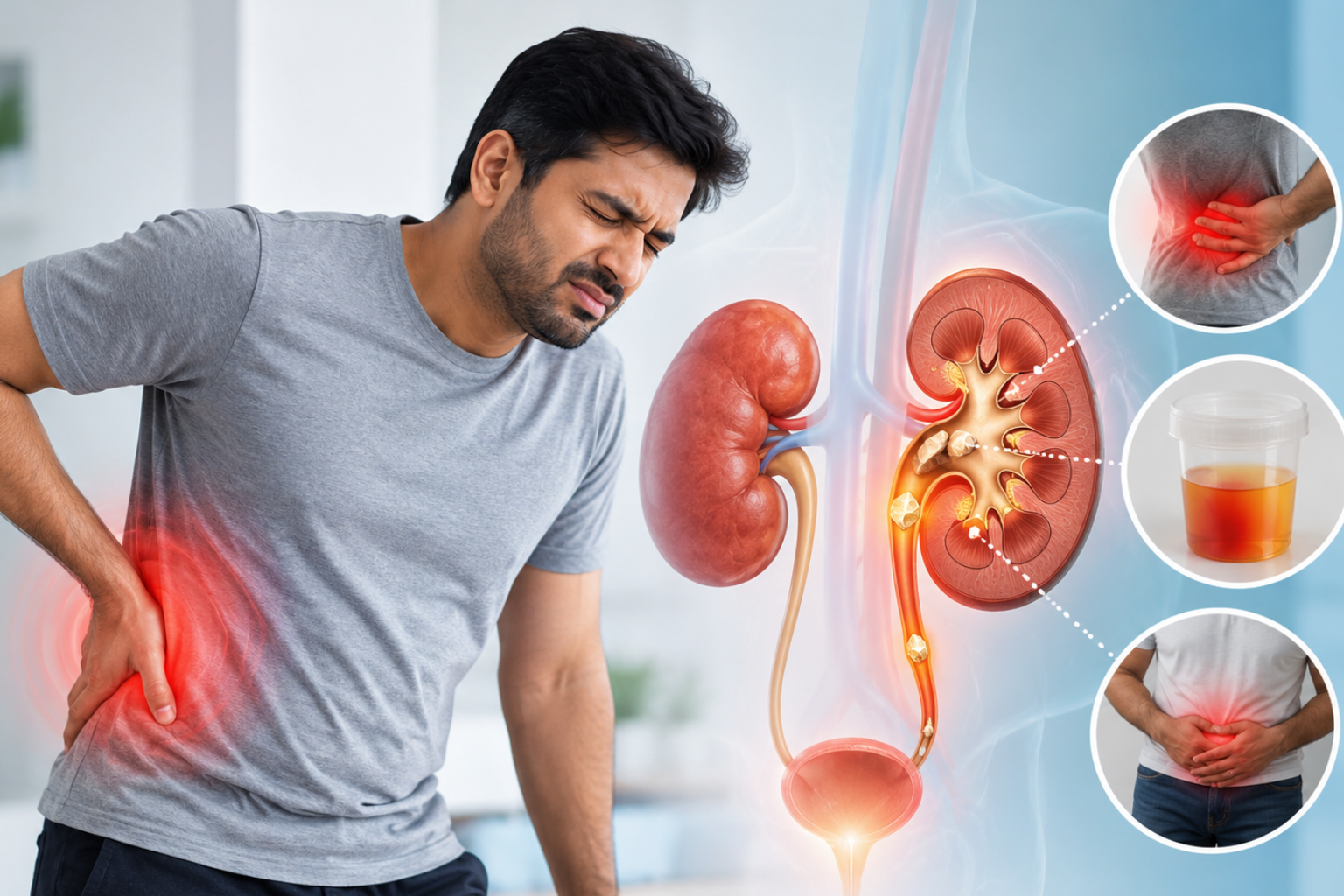
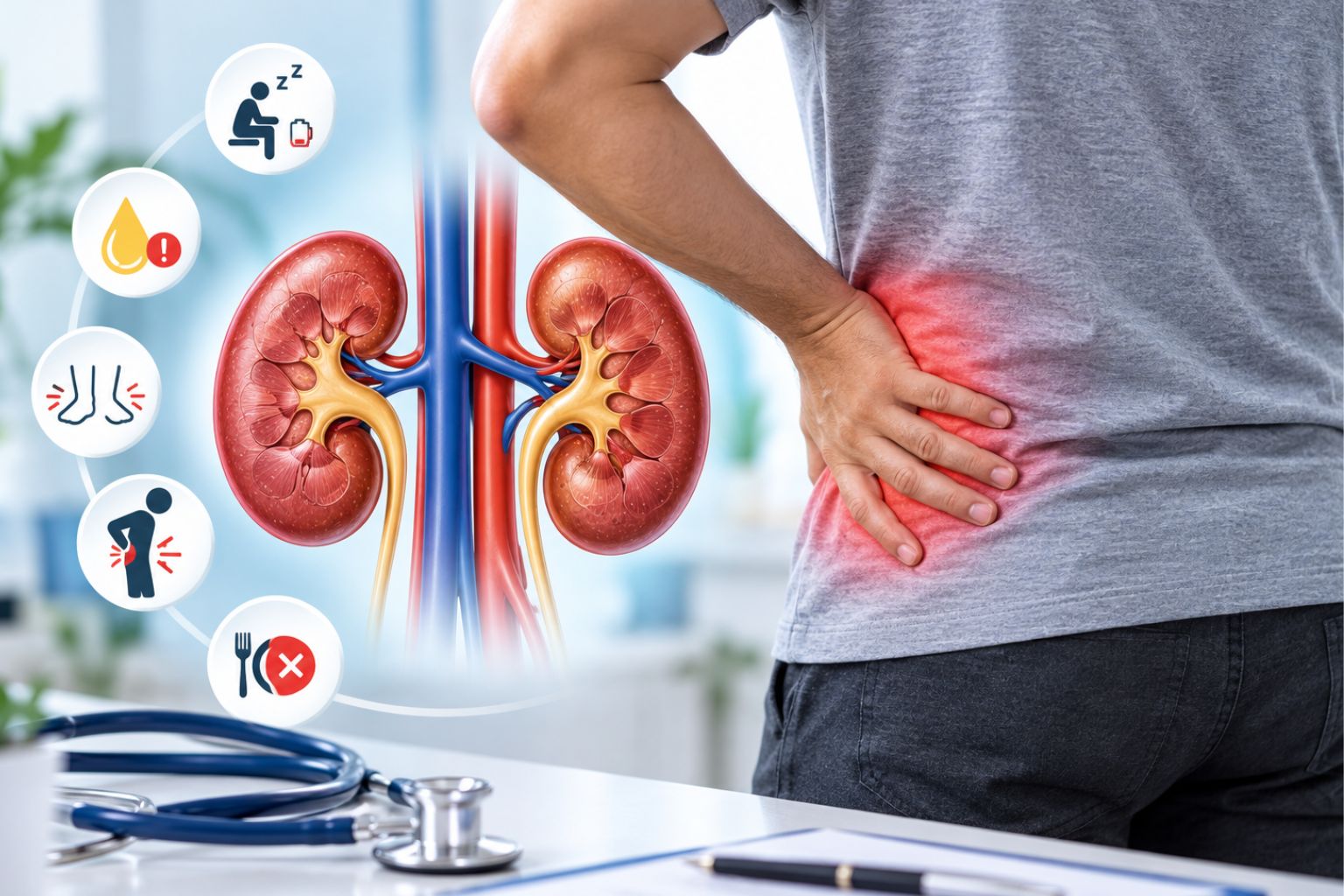
The classic spot is the flank: the area on one side of your back, just below the ribs, where the kidney sits. Kidney stone symptoms may cause only a heavy, vague ache near the area. The sharper pain begins when it drops into the urethra, the narrow tube that carries urine down to the bladder. The ureter squeezes hard to push the stone along, and that spasm is what hurts.
As the stone travels, the pain travels with it. It often slides from the back to the lower abdomen and then into the groin. In men, it can reach the testicle; in women, the lower pelvis. That movement is a clue. Pain that creeps downward on one side, in waves that build and peak before fading and returning, fits a stone far better than a strained muscle.
Here is a test many people stumble on themselves. Back muscle pain usually eases when you find the right position, and it hurts when you press the spot or twist. Stone pain ignores position. People describe squirming, pacing, switching between bed and floor, unable to settle anywhere. If that sounds familiar, don’t wait it out.
What Your Urine Can Tell You
Look before you flush. Urine is often the earliest clue.
Pink, red or brown urine points to blood, which shows up when a stone scrapes the lining of the urinary tract. Sometimes there’s too little to see, and only a urine test picks it up. Cloudy or strongly foul-smelling urine suggests infection, which can travel alongside a stone. A constant urge to go, or burning at the end of the stream, often means the stone has reached the lower end of the ureter near the bladder. It feels exactly like a UTI, and the two do overlap, which is why a urine test matters before anyone guesses at treatment.
Then there’s what’s missing. Passing very little urine despite drinking normally, or none at all, deserves a prompt visit, not another day of watching.
Other Warning Signs That Come With It
Nausea and vomiting are common, because the kidney and the gut share nerve pathways. A kidney in distress can upset the stomach badly enough that people assume it’s food poisoning. Cold sweats and restlessness often join in.
Fever and chills are a different matter. They suggest infection, and an infection behind a blocked ureter is one of the situations doctors take most seriously.
Location can also mislead. Right-sided stone pain can look like appendicitis, and in women a stone can be mistaken for an ovarian problem. Gallstones and plain muscle strain muddy it further. This is why self-diagnosis from a symptom list only goes so far.
Silent Killer Stones And Size
Some stones cause nothing at all and turn up on an ultrasound done for another reason. Small ones, a few millimetres across, often pass on their own with fluids and pain relief under medical guidance. Larger ones may not.
Pain doesn’t reliably tell you size, though. A tiny stone in a narrow spot can cause agony, while a bigger one resting quietly in the kidney can go unnoticed for years. That’s why an ultrasound is worth doing when someone has had unexplained blood in the urine, even with no pain.
When It Needs Immediate Attention
Head to a hospital the same day if you have:
- Pain that painkillers don’t touch
- Fever or chills along with flank pain
- Repeated vomiting that stops you from keeping fluids down
- Very little or no urine
- Heavy bleeding in the urine, or clots
Anyone with a single kidney, existing kidney disease or pregnancy should act even sooner. A blocked, infected kidney can be damaged quickly. Don’t drive yourself; ask someone to take you.
How A Kidney Stone Is Confirmed
Diagnosis is less mysterious than the pain. A urine test looks for blood and infection. A detailed blood report can show how well the kidneys are clearing waste, including creatinine. An ultrasound can show the stone and any swelling in the kidney from backed-up urine, and an X-ray helps in some cases. Sometimes a CT scan is needed for a clearer view.
At Thane Polyclinic & Diagnostic Centre in Dhokali, Thane West, pathology and imaging (sonography and X-ray) sit under the same roof as urology and nephrology consultations, open from 7 AM to 10 PM every day. For anyone looking for kidney stone treatment in Thane, that means the tests and the specialist opinion don’t need separate trips across town.
What happens next depends on how big the stone is and where it sits, and whether urine is blocked or infected. Small stones are often managed with fluids and pain relief while scans track their progress. Larger or stuck ones may need a procedure. A urologist makes that call from your reports, not from the pain alone. Carry any earlier scans or reports with you; they save repeat tests.
After the stone: what to change so it doesn’t return
Stones tend to return, so the first one is worth learning from. If the stone is analysed, ask what it was made of, because that shapes advice on food and fluids. And in a city where summers leave you sweating through the day, drink enough that your urine stays a pale straw colour.
If one side of your back has been aching in a way that doesn’t feel muscular, or your urine has changed colour and stayed that way, get it looked at.
Kidney stone symptoms can be easy to explain away, but a stone caught early leaves more options open than one found in an emergency room.