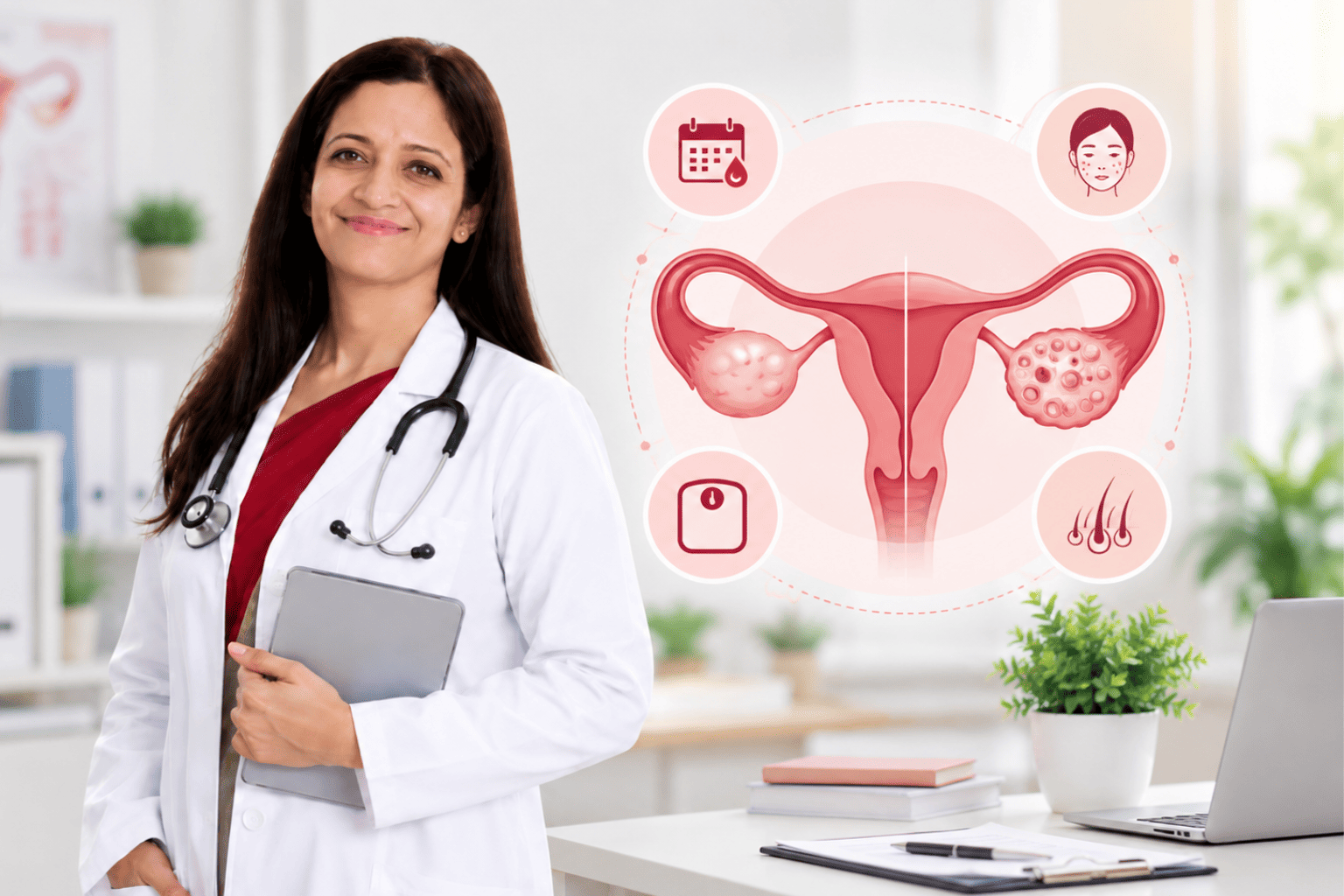

Two missed periods. A patch of stubborn acne that won’t clear. Overhair growth where it never used to. Most women explain each of these away on its own: stress, hormones, too much oily food last month. Put together, they often point to PCOS, and a gynaecologist in Thane can help you connect them and work out what is really going on. This guide covers what PCOS is, how it differs from PCOD, how it’s diagnosed, and what management looks like once you have an answer.
What PCOS Actually Is?
Polycystic ovary syndrome is a hormonal condition, not an ovarian disease in the way the name suggests. The ovaries make more androgens, the so-called male hormones, than they should; ovulation becomes irregular, and many women also develop insulin resistance, which makes the body less efficient at handling sugar. A recent global consensus paper puts the number affected at about one in eight women.
The “cysts” are the confusing part. They are not tumours or fluid-filled sacs that need removal. They are small follicles, each holding an egg that never quite matured, and on a scan they look like a string of tiny dots. But for someone who has been recently diagnosed, this might cause undue stress, which is why it’s important to consult a trusted and experienced Gynaecologist in Thane.
PCOS Symptoms That Get Explained Away
PCOS symptoms vary a lot from one woman to the next, and some have only one or two. Periods that regularly stretch beyond 35 days, or vanish for months, are the classic sign. Acne that carries on well past the teenage years is another. So is thicker, darker hair on the face, chest or abdomen, alongside thinning hair on the scalp. Some women notice weight gathering around the waist despite their efforts, or dark, velvety patches of skin on the neck and underarms. Trouble conceiving is often what finally brings people in.
Low mood and disturbed sleep show up more than people expect. PCOS symptoms aren’t limited to women who are overweight. Slim women get it too, which is one reason it gets missed. None of these signs proves PCOS on its own. Each has other explanations, thyroid problems being a common one, so the pattern matters more than any single symptom.
PCOS vs PCOD: Is There Really a Difference?
In everyday Indian conversation, the two terms are treated as separate. PCOD gets described as the milder, more common version, where the ovaries release many immature eggs. PCOS gets described as the more serious, whole-body metabolic condition. That’s a handy way of explaining severity, and plenty of doctors use the words loosely for the same reason. But international guidelines don’t recognise PCOD as a separate diagnosis. There is one condition, diagnosed one way, with a wide range of severity.
The terminology has shifted again. In May 2026, a global consensus renamed PCOS as polyendocrine metabolic ovarian syndrome, or PMOS. The old name misled too many people about cysts. You’ll hear all three labels for a while yet, and the label matters less than your own pattern of symptoms and test results.
How PCOS Is Diagnosed
There is no single test. In adults, the diagnosis needs two of three features: signs of high androgens, irregular ovulation, and polycystic-looking ovaries on ultrasound. An AMH blood test can now stand in for the scan, and when the first two features are both present, neither is needed. Doctors also rule out lookalikes such as thyroid problems and raised prolactin, which is why blood tests usually come first.
Here’s what many women don’t realise: a scan report saying “bulky ovaries with multiple follicles” isn’t a diagnosis by itself. Some women without PCOS have that picture, and some with PCOS don’t. In teenagers, both irregular ovulation and high androgens must be present, and ultrasound isn’t advised because it isn’t specific enough that soon after periods begin.
Depending on your age and history, the scan may be abdominal, which usually needs a full bladder, or transvaginal. Your gynaecologist in Thane will tell you which applies before you arrive.
Lifestyle Management: What Actually Helps
There is no one cure and no single pill that handles everything. Treatment follows whatever bothers you most.
Lifestyle sits at the base. If you are a little overweight, losing even a significant amount can bring cycles back and improve how your body handles insulin. Regular movement helps, whether that’s walking, cycling or strength work, and so does eating at regular times instead of skipping meals and overeating later. Crash diets tend to backfire.
Medication covers what lifestyle can’t. That may mean hormonal treatment to regulate cycles and settle acne or hair growth, medicines that improve insulin sensitivity, or ovulation induction for women trying to conceive. The right choice depends on whether pregnancy is on your mind, so that conversation should happen early. A dietician, dermatologist or diabetologist often joins the plan. Progress is slow, too. Cycles can take several months to respond, so a plan that looks like it isn’t working at week six may simply be early.
The Long-Term Effects of PCOS
PCOS isn’t only a fertility issue. Guidelines say every woman with PCOS symptoms should be evaluated for cardiovascular risk factors, and the condition also raises the odds of type 2 diabetes, sleep apnoea and low mood. Follow-up should therefore include blood sugar, cholesterol and blood pressure checks, and not just cycle tracking. Symptoms shift with age, and the diagnosis tends to stay, so a yearly review beats treating it as something you sorted out once.
When to See a Gynaecologist in Thane
Book a visit if your periods regularly run past 35 days, if you’ve gone three months without one, if acne or hair growth is getting worse, or if you’ve been trying to conceive for a year without success. Irregular periods are common in the first couple of years after a girl’s first period, so parents needn’t panic, but a check is reasonable if the pattern persists.
At Thane Polyclinic in Dhokali, gynaecological consultations, sonography and pathology sit under one roof, so a scan and a hormone panel don’t mean separate trips across the city. The clinic’s gynaecologist, Dr Kavita Velankar, works alongside a dietician and other specialists when the plan needs more than one input. Consultations run from 7 AM to 10 PM, every day of the week.
Bring your last few months of period dates, even if they’re only noted on your phone, along with any old scan reports. That history often tells a gynaecologist in Thane more than a single test does.